Applied Medical Sciences at Amman Arab University (AAU) Advances Innovation in Genetics and Stem Cells
The Faculty of Applied Medical Sciences at Amman Arab University Opens New Horizons for Innovation in Genes and Stem Cells
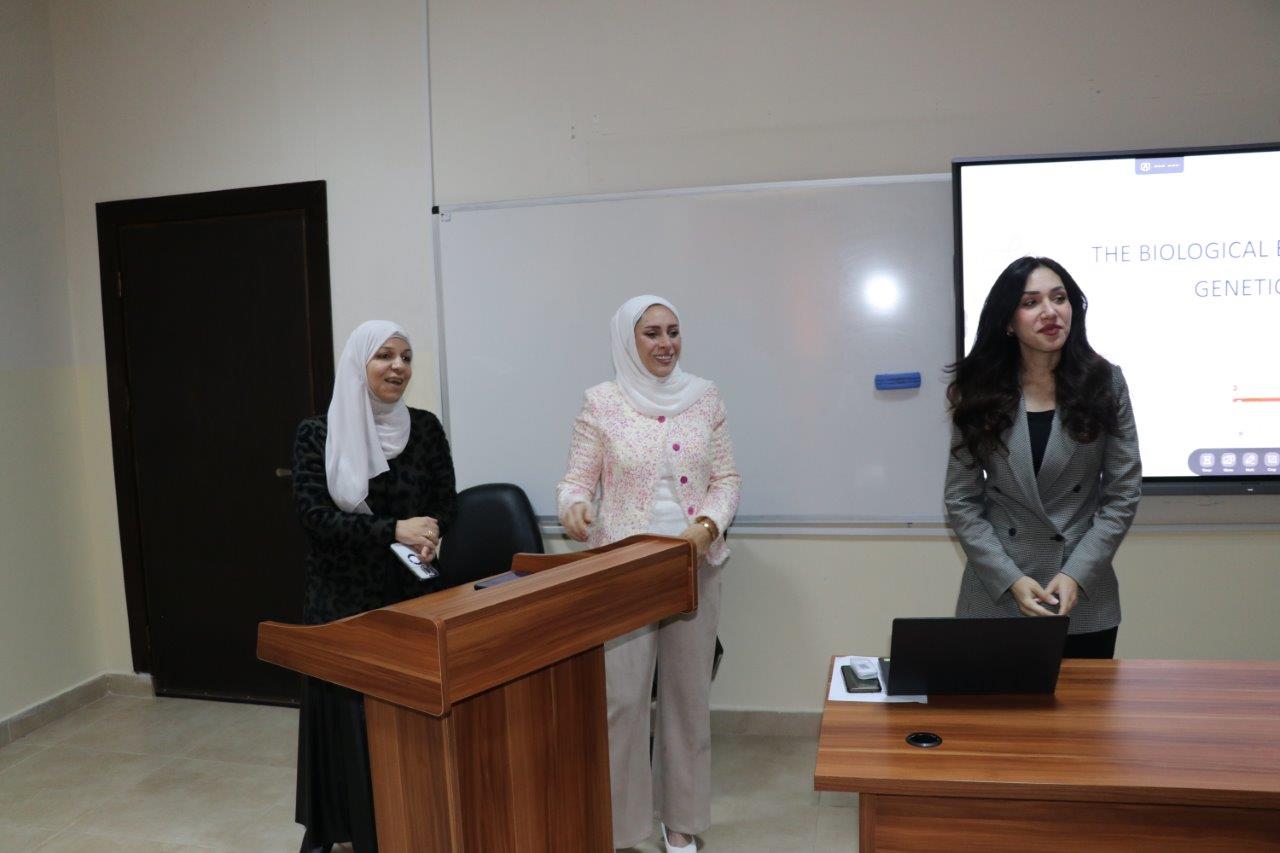
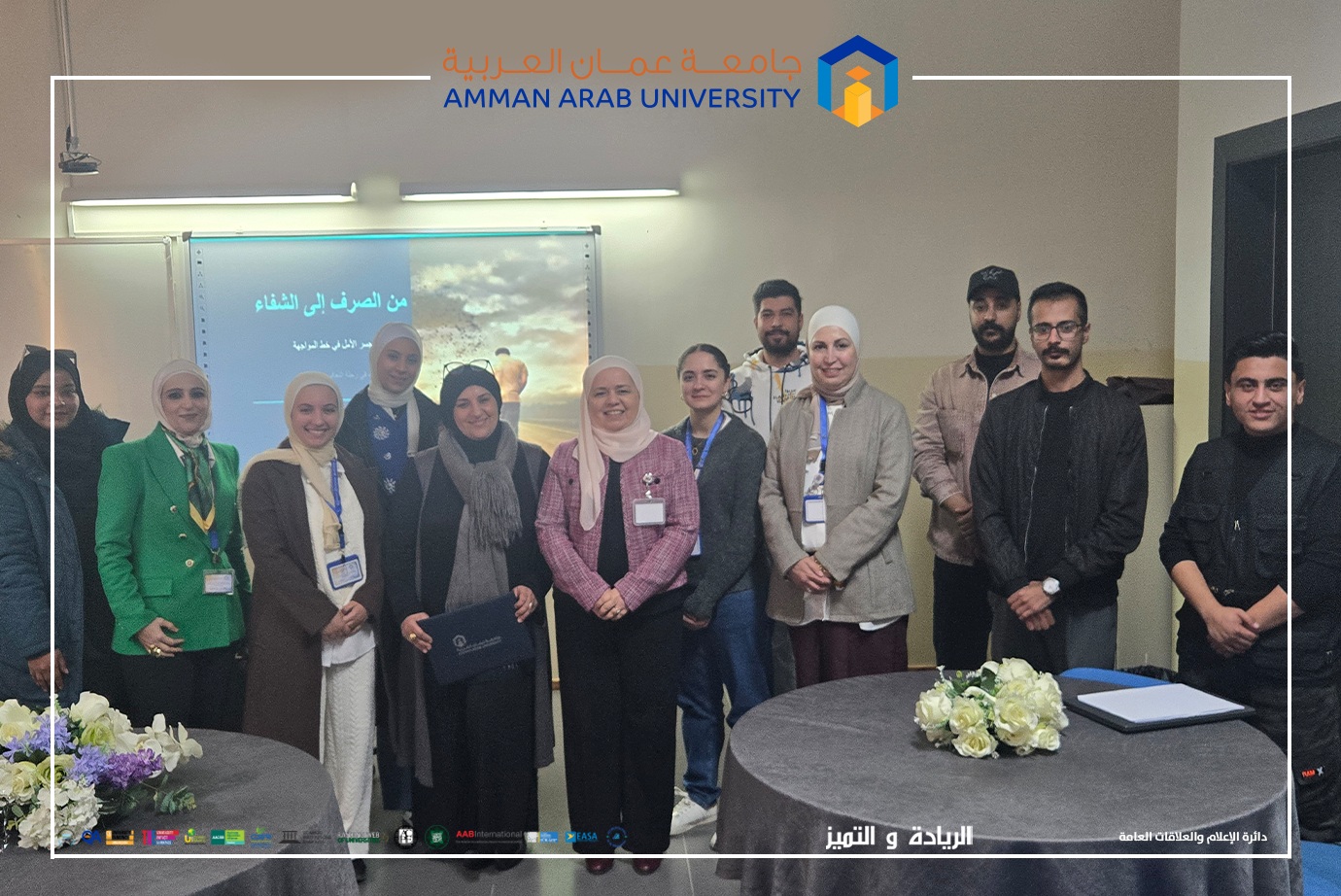
As part of Amman Arab University's commitment to promoting scientific research and keeping pace with the latest developments in biomedical sciences, the Faculty of Applied Medical Sciences organized a specialized scientific lecture entitled: "Biotechnology: Keys to Innovation in the Field of Genes and Stem Cells." This lecture, held in collaboration with INNOVIA Biobank (Baby Cord), aimed to bridge the gap between theoretical knowledge and practical application, and broaden the scientific horizons for students in the fields of biotechnology and advanced medical sciences. Faculty members and students from the Faculty participated in the event.
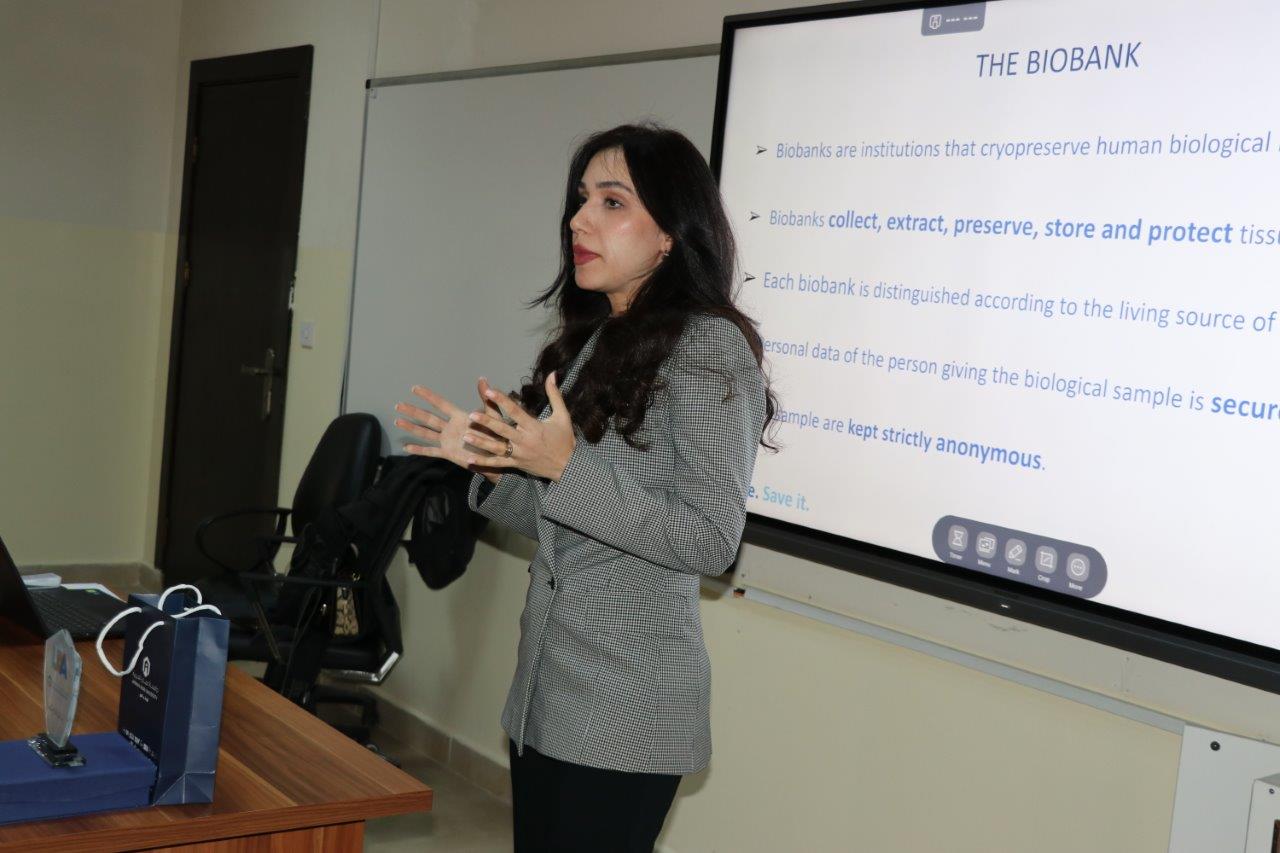
The lecture was presented by pharmacists Hanan Al-Safarini and Batoul Al-Azzam from INNOVIA Biobank. They explored the latest developments in biotechnology, focusing on advanced applications of genetics and stem cell research, and their role in developing diagnostic and treatment methods, supporting regenerative and personalized medicine. The lecture also highlighted the strategic role of cell and cord blood banks in promoting scientific research, developing future treatments, and supporting medical innovation, thus contributing to improving the quality of healthcare and enhancing the overall treatment system.
Additionally, Professor Dr. Rana Abu Hawij, Dean of the Faculty of Applied Medical Sciences, emphasized that Amman Arab University prioritizes the development of academic programs and the strengthening of partnerships with specialized scientific institutions. This approach aims to prepare qualified professionals capable of keeping pace with rapid scientific advancements and meeting the demands of the local and regional labor market