Amman Arab University (AAU) Strengthens Alumni Engagement through a Specialized Workshop on Pharmacovigilance and Adverse Drug Reaction Reporting
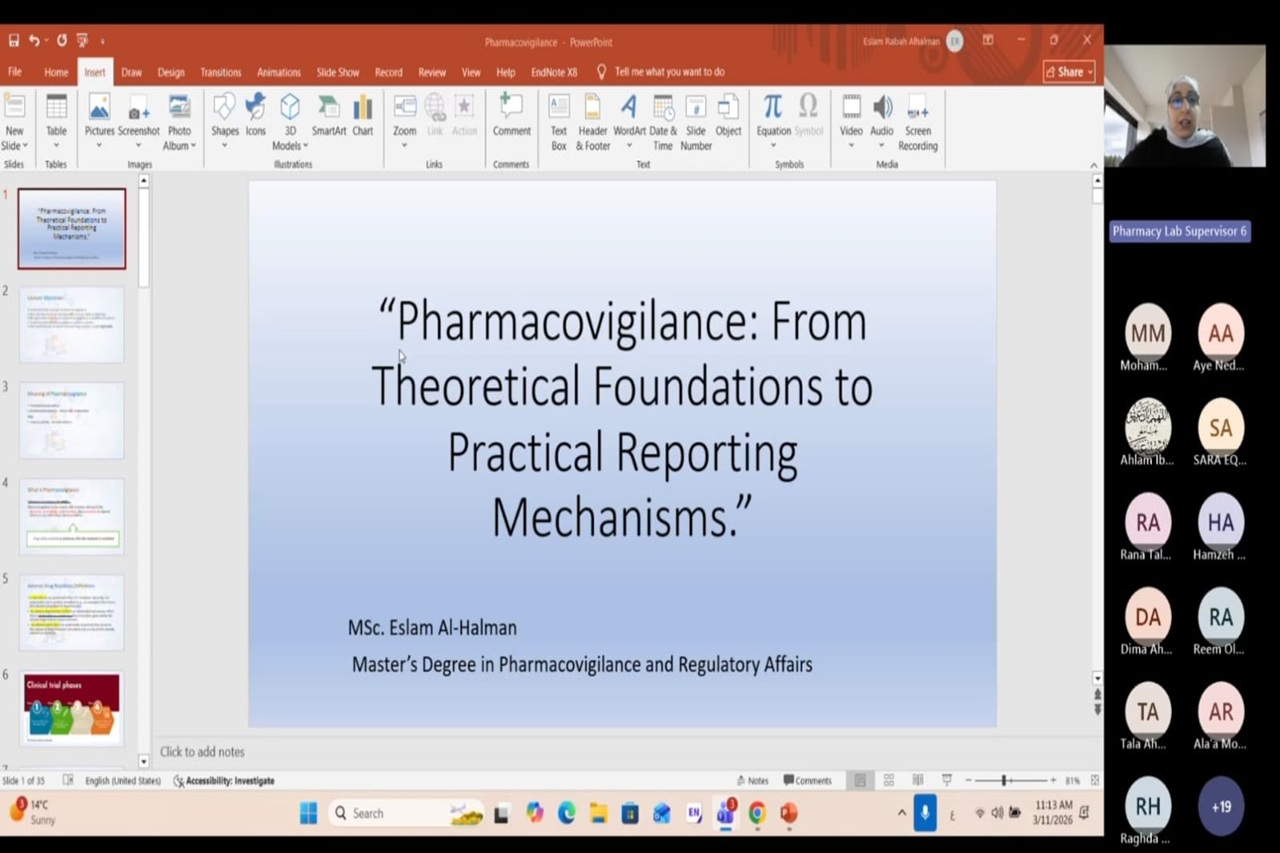
In line with Amman Arab University’s commitment to sustaining meaningful engagement with its alumni and supporting their continuous professional development, while simultaneously enhancing students’ awareness of emerging concepts in the healthcare sector, the Faculty of Pharmacy— in collaboration with the Career Guidance and Alumni Follow-up Office (King Abdullah II Fund for Development) at the Deanship of Student Affairs—organized a complimentary online workshop entitled: “Pharmacovigilance: Bridging Theory and Practical Reporting.” The event brought together pharmacy students and alumni in an interactive learning environment.
The workshop was delivered by pharmacist Islam Al-Halman, Laboratory Supervisor at the Faculty of Pharmacy and a holder of a Master’s degree in Pharmacovigilance and Regulatory Affairs. The session provided a comprehensive overview of pharmacovigilance as a scientific discipline, including its evolution and global significance. It emphasized its critical role in ensuring medicine safety, optimizing benefit–risk balance, and safeguarding public health. Particular attention was given to the contribution of pharmacovigilance systems in detecting, assessing, and preventing adverse drug reactions (ADRs), thereby supporting evidence-based regulatory decisions and improving healthcare outcomes.
A key component of the workshop focused on the practical application of pharmacovigilance principles through the use of the national electronic reporting system for adverse drug reactions, implemented by the Jordan Food and Drug Administration in collaboration with the World Health Organization. Participants were guided through the operational aspects of the system, including mobile-based reporting, accurate data entry, and proper submission of ADR reports in accordance with regulatory standards. The session underscored the importance of fostering a reporting culture among pharmacy students and graduates, recognizing their essential role as frontline contributors to medication safety and post-marketing surveillance.
Professor Rana Abu-Huwaij, Dean of the Faculty of Pharmacy at Amman Arab University, highlighted that such initiatives reflect the Faculty’s strategic vision to integrate academic learning with professional practice, enhance practical competencies, and maintain strong ties with its alumni network. She stressed that promoting awareness and active participation in ADR reporting is fundamental to strengthening pharmacovigilance systems and protecting patient safety. She also reaffirmed the Faculty’s ongoing commitment to delivering high-quality training programs that align with advancements in the pharmaceutical and healthcare sectors.
At the conclusion of the workshop, participating alumni expressed their appreciation for the Faculty’s continued efforts to engage graduates beyond their academic journey. They noted that such specialized training opportunities play a significant role in advancing their professional knowledge, keeping them abreast of current developments, and reinforcing their contribution to safe and responsible pharmaceutical practice, as well as to community health.