"Amman Arab University" (AAU) Pharmacy Organizes Interactive Workshop on Personality Types and Communication Skills Enhancement
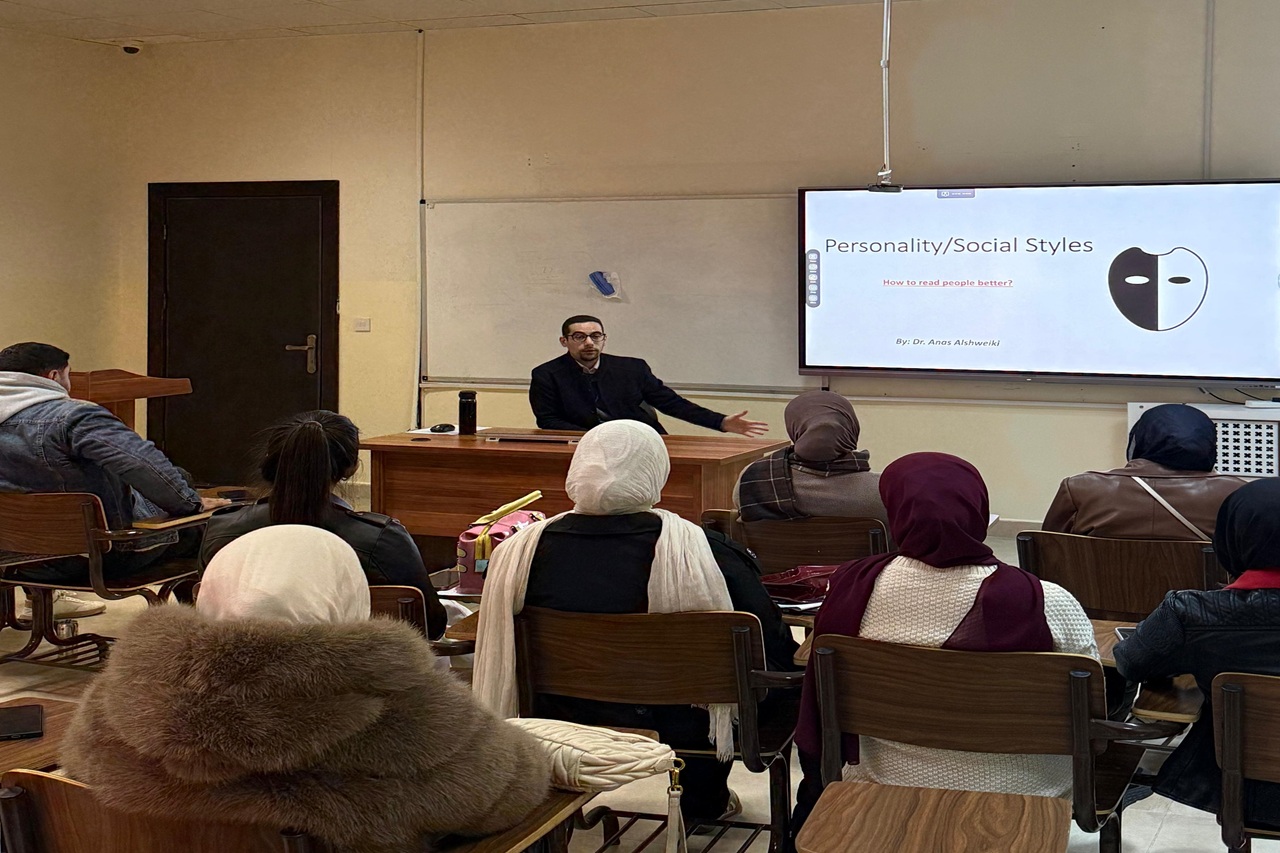
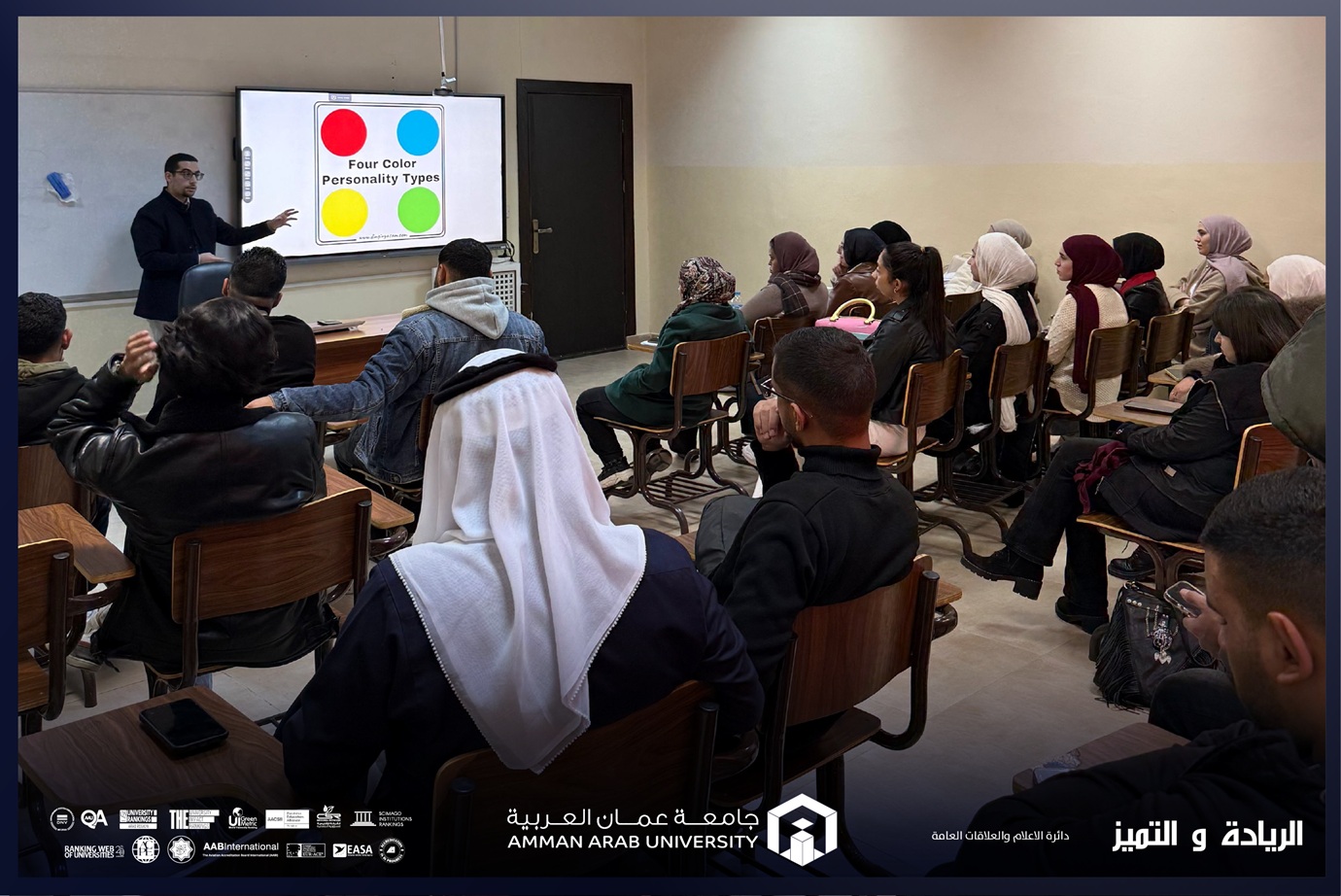
Within the framework of Amman Arab University's vision to prepare scientifically and professionally qualified pharmaceutical cadres, and its commitment to developing personal and interpersonal skills alongside academic competencies, the Faculty of Pharmacy organized a specialized interactive workshop titled: "Personality/Social styles: How to Better Interact with Others?". The workshop was presented by Dr. Anas Al-Shweiki, a faculty member at the Faculty of Pharmacy, with the participation of students from various academic levels.
The workshop focused on providing students with an integrated set of personal and professional tools to enhance their career readiness and keep pace with rapid market demands. Key areas included effective communication, building professional relationships, and understanding human behavior within the healthcare environment. The session featured an analytical presentation of the four main personality types, highlighting the core differences between them and exploring practical strategies for dealing with the needs of each type based on their behavioral characteristics and keys to positive communication.
Dr. Al-Shweiki pointed out that professional excellence in the health sector is not limited to scientific proficiency alone, but relies fundamentally on understanding different personality patterns and the ability to interact with them with flexibility and awareness. He emphasized that a successful pharmacist is one who possesses communication skills, emotional intelligence, and the ability to read the needs of others—especially patients—treating them with a balanced humanitarian and professional approach.
The workshop witnessed remarkable attendance and engagement from students, who showed high interest in the content for its pivotal role in raising their practical competencies, enhancing patient interaction skills, and improving the quality of communication with community members, in line with professional ethics and the pharmacist's social responsibility. At the conclusion of the workshop, students expressed their appreciation for the importance of such applied activities, confirming their desire to participate in more similar workshops that contribute to enhancing their professional skills and readiness to join the labor market.